Montreal Dog Training Expert
When experience matters.
What Clients Say


212 Google reviews
Trusted by Montreal Dog Owners for 30+ Years
30 years is a long time. What matters is what those years have taught me.
I’ve been training dogs for more than 30 years.
Over that time, I’ve worked with an enormous range of dogs, temperaments, personalities and behavioural challenges. I’ve worked with puppies and rescues, anxious dogs and confident ones, dogs with serious reactivity and dogs whose owners simply wanted to build a better relationship with them.
I’ve also worked with many owners who had already tried training and were still struggling.
That’s where experience matters.
When you work with me, you’re not simply learning how to teach your dog a set of exercises. You’re gaining access to everything I’ve learned from working with dogs for more than three decades.
Every dog is different. What works beautifully for one dog may be completely inappropriate for another. My job is to understand the dog in front of me, recognize what is driving the behaviour, consider the owner’s circumstances and the environment the dog lives in, and then determine what that particular dog needs.
The exercises are important. But they are only part of the process.
The real value is knowing which exercises to use, why they matter, when to use them, how to adapt them, and how to help you understand what your dog is telling you along the way.
My goal isn’t simply to train your dog while I’m with them.
It’s to give you the understanding and tools to communicate with your dog more effectively, so that what we accomplish together becomes part of your everyday life.

Every dog is different. So the training has to be.
There is no single technique that works for every dog.
A nervous rescue dog isn’t the same as a confident puppy. A highly reactive German Shepherd isn’t the same as a dog struggling with separation anxiety. Even two dogs of the same breed can have completely different temperaments, experiences and needs.
That’s why I don’t start with a predetermined solution.
I start with the dog.
I look at temperament, behaviour, communication, environment and the relationship between the dog and the person handling them. I want to understand what is actually happening before deciding what needs to change.
Sometimes the answer is straightforward. Sometimes it isn’t.
And sometimes the right decision is to change the plan entirely.
I’ve told owners that their dog wasn’t ready for a particular program. I’ve changed the way I work with a dog because what I initially expected wasn’t what the dog in front of me needed.
That’s not an inconvenience. That’s the job.
After more than three decades of working with dogs, I have a large toolbox. Experience has taught me that the skill isn’t knowing how to use every tool.
It’s knowing which one to reach for.
You’re not just training the dog.
A dog can learn an exercise. But if the person handling them doesn’t understand what they’re seeing, what they’re asking for, or what to do when things don’t go according to plan, the training doesn’t go very far.
That’s why teaching the owner is such an important part of my work.
I want you to understand your dog—not just memorize a list of commands.
I’ll explain what I’m seeing, why your dog is responding the way they are, what your role needs to be, and how to recognize the small signals that can make a big difference.
Because ultimately, I’m not the person living with your dog.
You are.
My job is to give you the knowledge, understanding and practical tools to take what we’ve accomplished together and make it work in your everyday life.
The goal isn’t for your dog to behave perfectly for me.
The goal is for you and your dog to function better together.
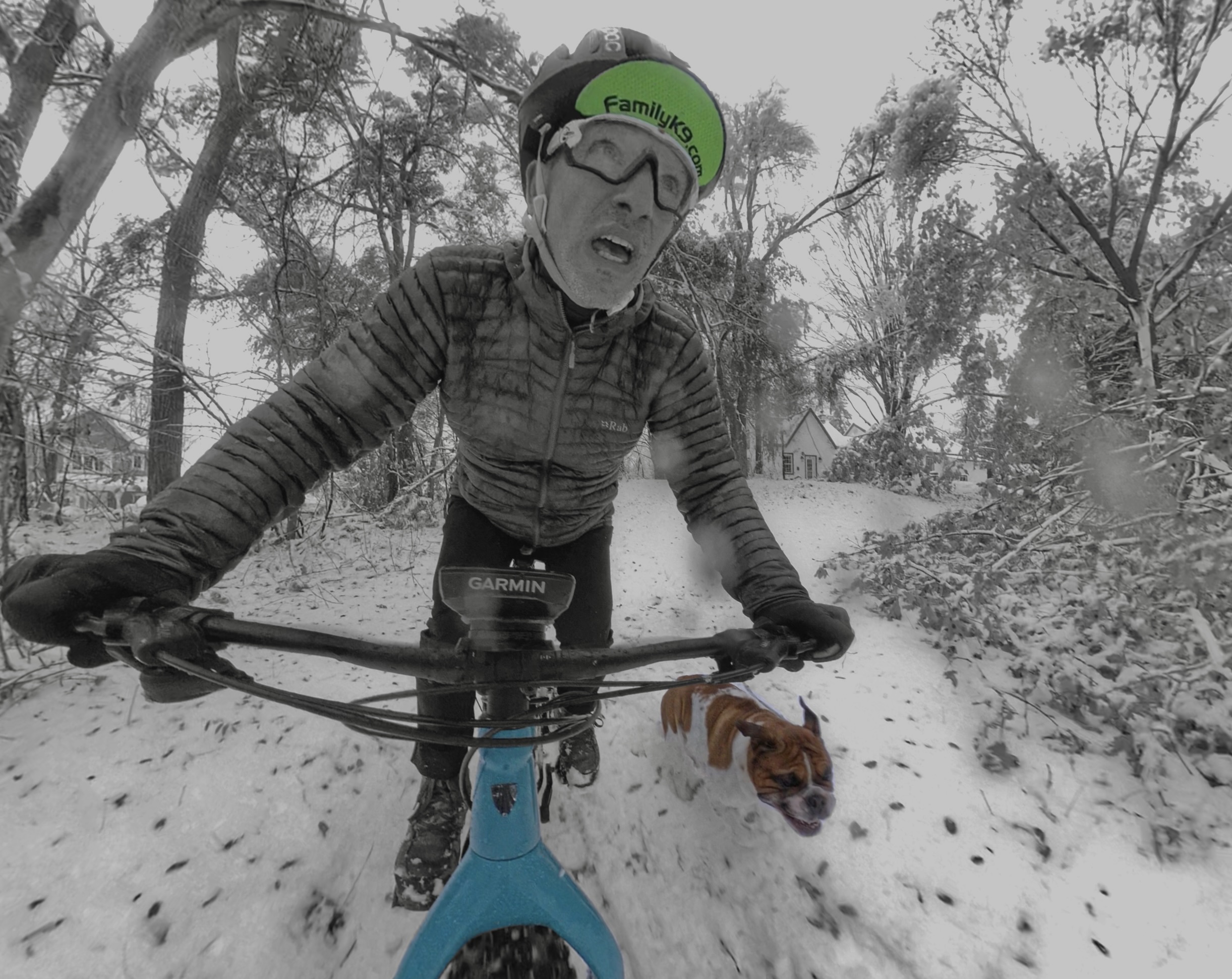
The results speak for themselves.
After more than three decades of training dogs, I’ve had the privilege of helping hundreds of dogs and their owners. Their experiences say far more about my work than anything I could say about myself.

Luca
Rescue dog with Severe Trauma
“He sets realistic goals for the training, and explains what is possible.”
“He told us… that leaving Luca at the kennel would be far too stressful for him.”
“Luca went from belly crawling through doorways… to being a happy little guy who trusts us to keep him safe.”

Goose
Separation Anxiety
“We worked at this for over two years… It just didn’t happen no matter how hard we tried.”
We consulted veterinary behaviourists, certified separation anxiety trainers, read and implemented desensitization techniques from books
“We’re now able to leave Goose on his own for hours. He is able to settle down and remain calm by himself while we are away, and this has really given us our lives back.”

Jackie
High Energy & Reactivity
“Our previous private training had failed us, and we were on the verge of the frightening thought that we would need to rehome her.”
“Jackie came home a different dog—and we became better owners.”
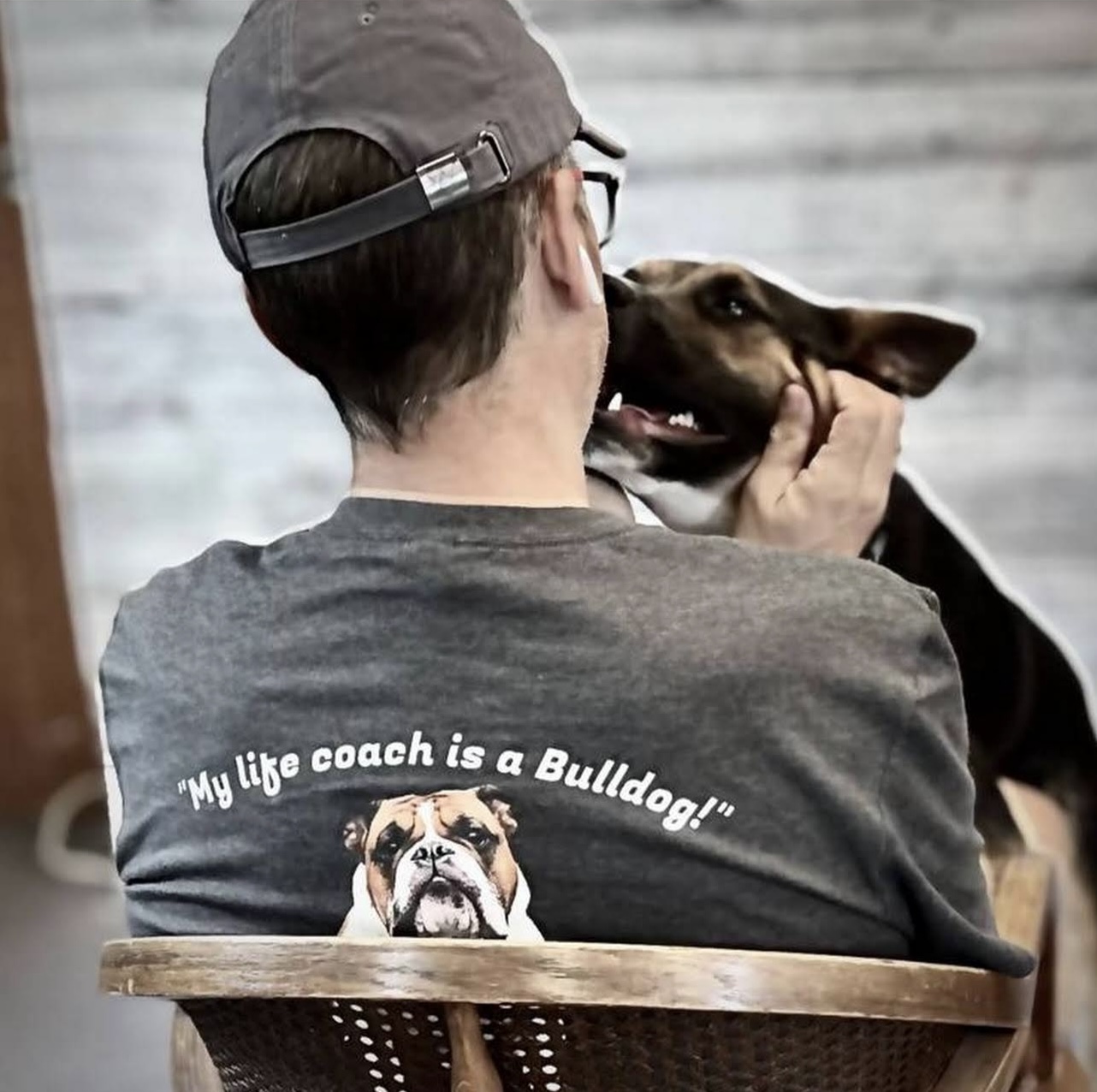
Bruno
Multiple Bites
“I brought my 2-year old german shepherd mix to Nick because of his increasing aggression. He’d bitten several times, including me. Walks with him were a constant source of stress, having to constantly dodge and avoid people and other dogs. My anxiety was through the roof, and I was honestly thinking of giving Bruno up.”
“the reviews don’t lie — Nick delivered! I now have a very well-mannered dog who looks to me for guidance <3”
What working with me actually looks like.
There is no one-size-fits-all program at Family K9.
Every dog brings a different temperament, history, environment and set of challenges. Just as importantly, every owner and family has different needs.
We start by understanding the whole picture. I assess the dog, listen to you, and determine what I believe will give you the best chance of success.
We also talk honestly about what is realistic.
Training can create remarkable change, but every dog is different. Genetics, history, temperament, environment and the owner’s ability to follow through all affect the outcome. I’ll explain what I believe is achievable, how long I expect it to take, and what will be required from you.
1.
Consultation
We begin by looking at the dog in context—not just the behaviour you want to change.
I want to understand what you’re seeing, what you’ve tried, what life with your dog currently looks like, and what you want that life to become.
2.
The right approach
Once I understand the dog and the situation, I’ll recommend the approach I believe is appropriate.
Sometimes that’s private lessons. Sometimes it’s an intensive “Board & Train” program, where your dog stays at home and I come to you each day. In many cases, either approach could work, and the decision simply comes down to what makes the most sense for you and your goals with your dog.
I’m not interested in selling you a program just because it’s a program I offer. Fit is important to me.
3.
Training the dog—and the owner
The dog learns the skills, but that’s only part of the process.
You need to understand how your dog thinks, what they’re communicating, how to respond, and how to make those skills part of everyday life.
My job is to give you that understanding—not just a list of exercises to practice.
4.
Transfer & follow-through
Training doesn’t end when our sessions do.
Whether we’ve worked together privately or through an intensive program where I train your dog for you, I’ll make sure you understand how to carry the work forward.
Because the goal isn’t a dog that behaves for me.
The goal is a dog that can live successfully with you.
The goal isn’t a dog that behaves for me.
The goal is a dog that can live successfully with you.
Every dog has a different story.
Puppies, rescues, family dogs, anxious dogs, high-energy dogs, small dogs, large dogs—and everything in between.
The goal isn’t to make every dog the same. It’s to help each dog become easier to live with, while building a relationship based on trust, communication and clear guidance.


I’ll tell you what you need to hear.
I don’t make promises simply because someone is willing to pay for them.
Every dog is different. Some challenges can change dramatically with the right training and commitment. Others require ongoing management and realistic expectations.
I’ll tell you what is possible, what it will take, and where the challenges are likely to be.
Sometimes that means recommending more training. Sometimes it means changing the way you approach your dog. And sometimes it means telling you that a particular program isn’t the right fit.
I’d rather have an honest conversation with you than sell you something that won’t help.
Let’s talk about your dog.
If you’re struggling with your dog’s behaviour, or simply want to build a better relationship with your dog, let’s start with a conversation.
Tell me what’s going on, what you’ve tried, and what you’d like to change. We’ll talk about your dog, your situation, and whether I can help.