Reactive Dog Training in Montreal
Helping Fearful & Reactive Dogs Become More Confident in the Real World
Help for Reactive Dogs and Owners
Does your dog bark, lunge, freeze, pull, panic or try to escape when confronted with people, dogs, noises or unfamiliar situations?
Does walking your dog feel like you constantly have to anticipate what might happen next?
At Family K9 Dog Training, Nick works with dogs whose fear, anxiety, excitement or lack of confidence can make everyday life difficult.
With more than 30 years of professional dog-training experience, Nick works with each dog as an individual to understand the behaviour, establish communication and develop practical skills that can be used in the real world.
Because the goal isn’t simply to stop a dog from reacting.
The goal is to help the dog become more comfortable experiencing the world around them.
Real World Training Scenarios for Reactive Dogs - Real World Success Stories
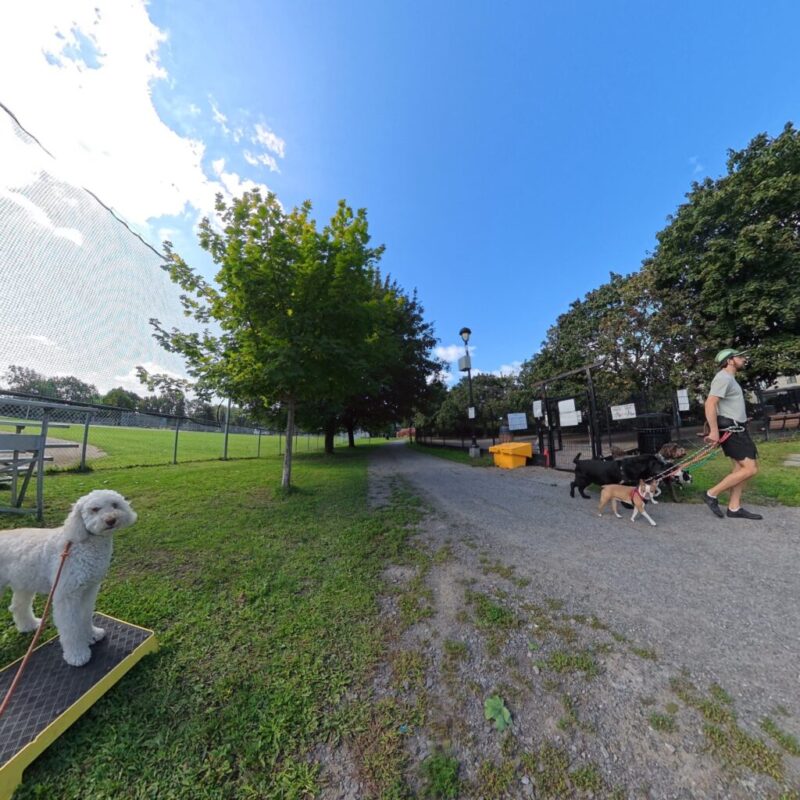
Hershey: A Real-World Reactive Dog Training Case Study
Hershey is a 4-year-old Lab/Pointer mix who came to Family K9 Dog Training for help. Nick had previously worked with Hershey’s owner with her last dog a dozen years earlier.
Hershey is a rescue and had lived as a street dog and was fearfully reactive. His challenge wasn’t aggression.
Hershey was scared.
He was reactive to dogs as well as new situations, people and noises and needed to develop confidence in the world around him.
Before training, his fear had already created a serious safety concern.
At one point, Hershey perceived a couple of people at a considerable distance as a threat and became frightened enough to slip out of his harness and escape.
For an owner, an incident like that is frightening.
It also raises an important question:
How do you help a fearful dog become confident enough to safely experience everyday life?
Nick assessed Hershey in March 2026, and Hershey completed his in-home intensive training by the end of the month.
The videos below show what Hershey looked like after training in ordinary, real-world situations.
Hershey: From Fearful Rescue Dog to a More Confident Companion
Hershey — Training Timeline
ASSESSMENT
March 2026
PROGRAM
In-Home Intensive
COMPLETED
March 2026
Four months later, his owner had this to say:
“We’re Living Our Best Lives”
“Four months later I’m happy to share that Hershey and I are living our best lives.”
— Alison Parker and Hershey
What does successful reactive dog training actually look like in everyday life?
The following videos show Hershey after his training in real-world situations.
In several of these situations, I am giving him little or no direction. The purpose isn’t to demonstrate how well Hershey can follow commands. It’s to show how comfortably he can experience ordinary situations.
1. Walking Past a Reactive Dog
Hershey and I are walking through town when we pass another dog who is barking at him continuously. Prior to training Hershey slipped out of his harness this street and ran away because he saw 2 people in the distance. Fear of people, circumstances and dogs were driving his reactivity.
Back on the same street and a few days into training Hershey is finding his confidence.
We pass a barking dog.
He doesn’t react back.
He simply continues walking with me and passes the barking dog without breaking stride.
For a dog who previously reacted to unfamiliar situations out of fear, that kind of neutrality is an important change.
2. An Unexpected Person Approaches
This wasn’t a planned training exercise.
I was setting up my camera because I wanted a shot of Hershey and I with the fantastic mural. I didn’t notice the woman approaching us.
Hershey noticed her.
He calmly observed her as she approached and then followed me away from the sidewalk, naturally creating space so she could pass.
You can see him observe her – and check with me as well.
I gave him no direction because there was no need for direction.
There was no command telling him what to do.
There was no correction.
He simply remained casual and calm.
The woman was very kind and even said, “I didn’t want to startle you.”
For me, this is one of the most interesting clips because it shows Hershey responding to an unexpected situation without needing to be told how to respond.
3. A Relaxed Walk in the Woods
This isn’t a formal training session.
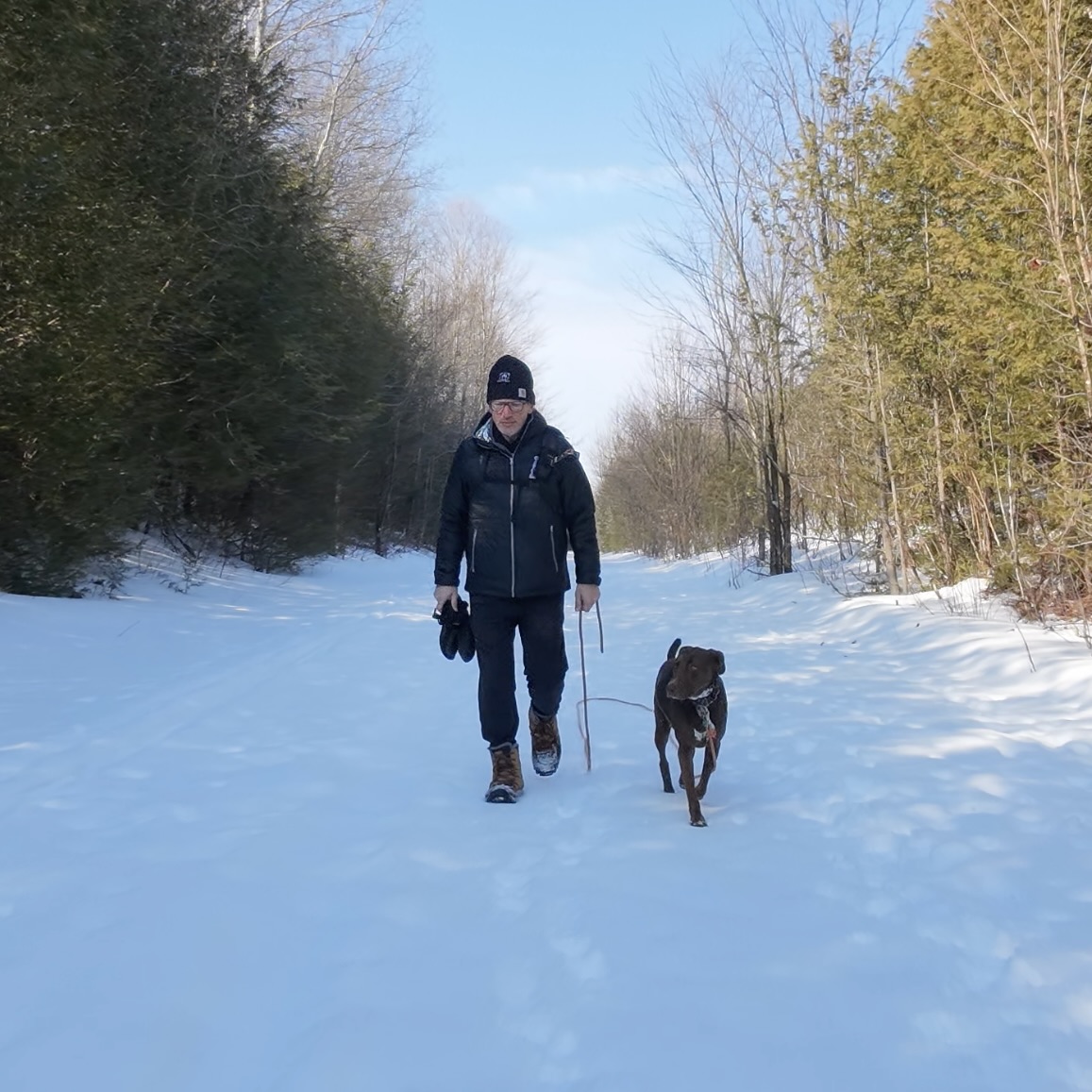
Hershey and I are simply enjoying a trail walk.
He’s on a 30-foot long line and has plenty of freedom to explore, as he does periodically throughout the walk.
I’m not constantly calling him back.
I’m not directing his every movement.
He’s free to investigate his surroundings.
But every so often, Hershey checks in with me on his own.
That voluntary check-in is significant.
He’s able to explore his environment while remaining aware of where I am.
4. Reactive Dog Being Neutral – Just Hanging Out at Tim Hortons
This is my favourite video because, for several minutes, almost nothing happens.
And that’s exactly the point.
Hershey and I are sitting near the entrance of a Tim Hortons.
People are continuously coming and going.
I’m drinking a coffee.
I don’t give Hershey commands.
I don’t correct him.
I don’t redirect him.
I don’t interact with him throughout the video.
I’m simply enjoying my coffee while Hershey watches the world go by.
People walk past him.
He notices them.
He observes them.
And he remains relaxed and neutral.
I’m not telling him what to do or how to react.
I’m not constantly managing his behaviour.
He’s simply comfortable enough to sit there and watch what is happening around him.
For a dog whose history included fear and reactivity toward unfamiliar people, situations and noises, that neutrality is exactly the kind of real-world behaviour we wanted to see.
Four Months Later: The Full Story
“He struts around the neighbourhood with confidence and I swear he smiles at the people we meet.”
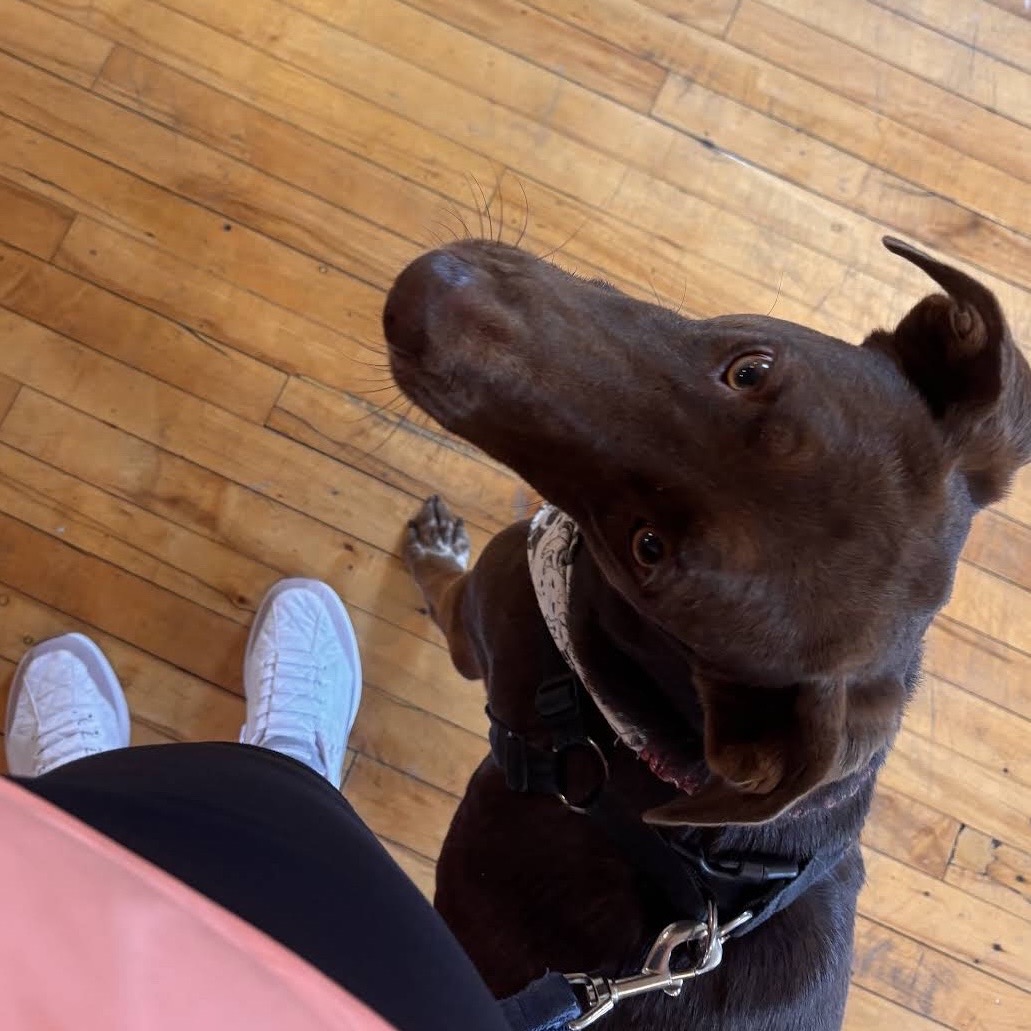
Hershey Waiting patiently @ the Coffee Shop
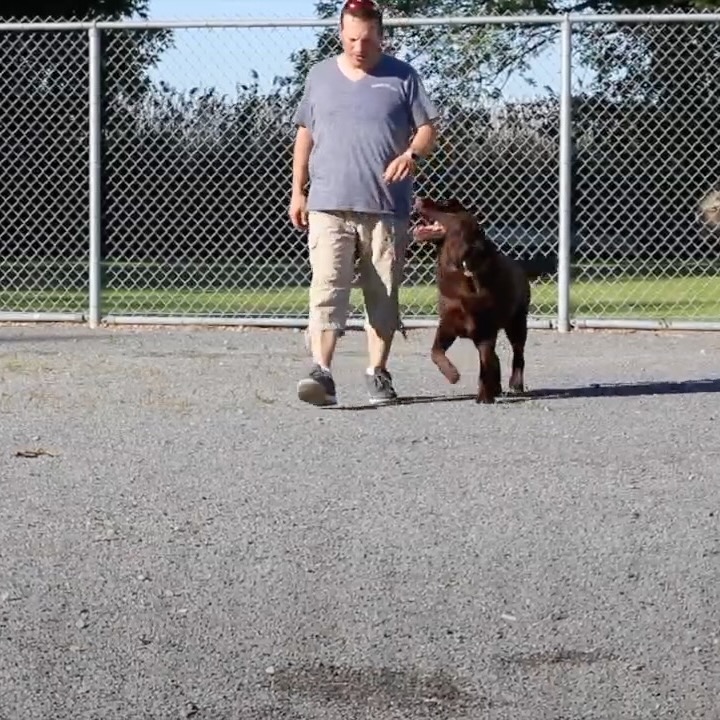
Alison's First dog Hershey - trained a dozen years ago. Same name, different dog and different training needs.
What Is a Reactive Dog?
“Reactive” is commonly used to describe a dog that responds intensely to particular situations or triggers.
A reactive dog may:
- Bark at people or other dogs
- Lunge on leash
- Growl or snap
- Pull intensely toward or away from a trigger
- Stare or become fixated
- Freeze or shut down
- Panic or attempt to escape
- React to unfamiliar people
- React to other dogs
- Become overwhelmed by noises or unfamiliar environments
- But reactivity does not automatically mean aggression.
- Some dogs react because they are frightened.
- Others may react because of frustration, excitement, poor socialization, lack of confidence or difficulty coping with a particular environment.
That’s why understanding the individual dog matters.
Different Types of Reactivity Require Different Training
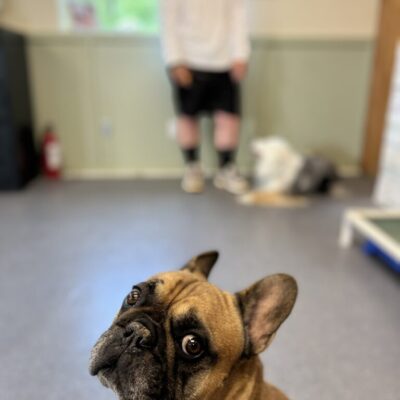
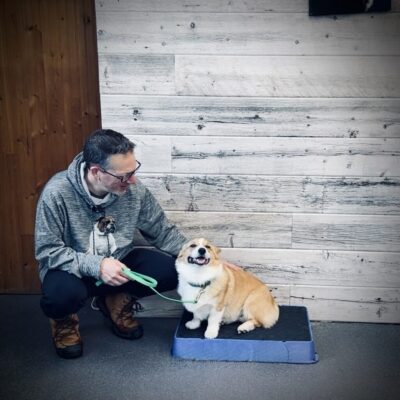
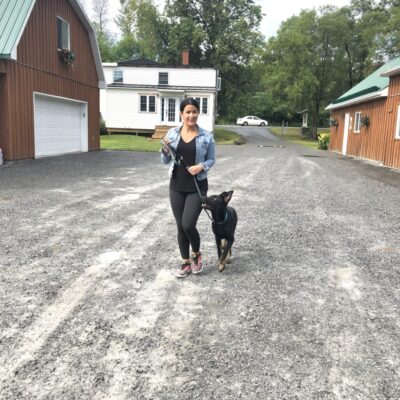
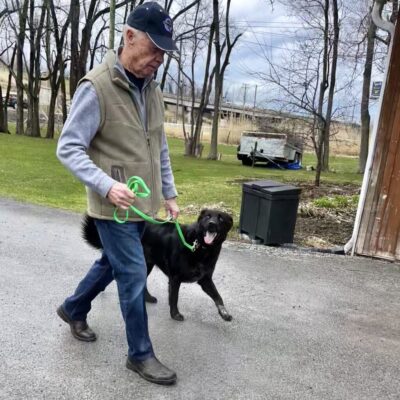
Reactive Dog Training Is About More Than Stopping the Behaviour
When an owner says, “My dog goes crazy when he sees another dog,” the barking or lunging is only part of the picture.
We need to understand what is happening underneath the behaviour.
What triggers the reaction?
How intense is it?
How quickly does the dog escalate?
Can the dog disengage?
What happens before and after the reaction?
How does the owner respond?
What happens at home?
What happens on walks?
What happens when the dog encounters people, dogs, noises or unfamiliar environments?
These details matter.
There is no single training program that is appropriate for every reactive dog.
The approach needs to be based on the individual dog, the circumstances and the goals of the owner.
Thank you Nick! Since completing his training Lucky is so much calmer and we are so pleased with how responsive and happy he is.
Walks are easier, he moved away from he door and stayed on place when we had a delivery (that never could have happened before training!).
He is a large powerful dog and we are are older and never thought we would have the ability to control his reactions like this.
We train with him a little everyday and he loves it!
-Lucky’s owner Malgorzata
Private Reactive Dog Training in Montreal
Family K9 provides individualized dog training for owners dealing with challenging behaviour, including fear, reactivity, anxiety and aggression.
Depending on the individual dog and circumstances, training may address:
- Reactivity toward other dogs
- Reactivity toward people
- Fearful behaviour
- Leash reactivity
- Barking and lunging
- Difficulty coping with distractions
- Anxiety and avoidance
- Overexcitement
- Escape behaviour
- Aggressive behaviour
- Difficulty maintaining control in public
- Lack of confidence in unfamiliar situations
Training can take place in the environments where these behaviours actually occur, including the home and surrounding neighbourhood.
In-Home Dog Training
Working with a dog in its normal environment can provide valuable information about the behaviour and allows training to become part of everyday life.
Intensive In-Home Training
For some dogs and owners, an intensive approach may be appropriate. Similar to an in kennel or Board and Train however your dog stays at home and Nick comes to you each day to work on the training goals outlined in your consultation.
Family K9 offers intensive in-home training designed to provide concentrated training while allowing the dog to remain in its familiar environment.
Every dog is different. Hershey’s experience is his own, and training outcomes depend on the individual dog, the behaviour involved, and the owner’s continued participation.
Bruno - Reactive Dog Brought to Family K9 from Miami for Training
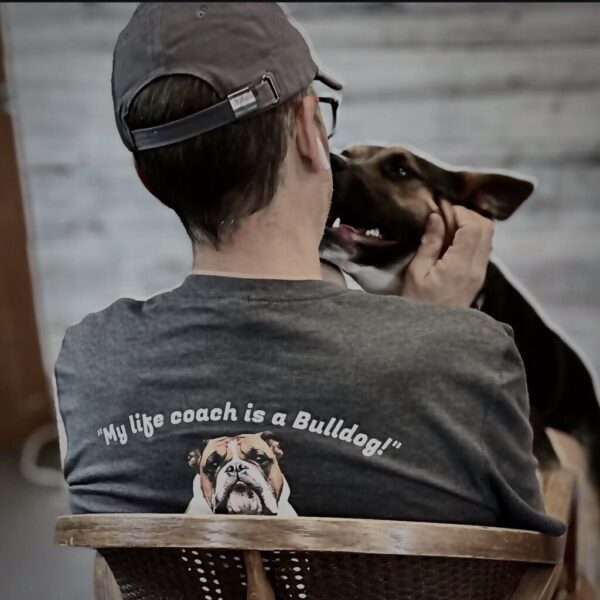

Update from Owner after Training is completed.
Another positive update! Just now on our walk, we crossed paths with a man with two poodle like things. They were on those longer retractable leashes. I saw they coming and I was prepared. had bruno in heel. I walked Bruno out of their way.
After they passed us, one of them lunged at Bruno aggressively. Bruno’s ears perked up as if he was about to do something. I told him to leave it. He ignored them.
This is the way I always want him to react in these situations!
Your Dog’s Story
Hershey is one example.
But Hershey’s story also demonstrates an important principle:
Not every dog needs the same training.
Nick’s first dog for this particular owner was a completely different dog.
Approximately 12 years earlier, she brought Nick her boisterous purebred chocolate Labrador.
That dog loved everyone.
His enthusiasm, however, meant jumping, lunging and licking could become a problem.
After training, according to his owner, he became the perfect family pet.
Years later, she returned with Hershey.
This time the challenge wasn’t excessive enthusiasm.
It was fear and a lack of confidence.
Two dogs.
Two very different personalities.
Two very different training needs.
That’s why Family K9 takes an individual approach to every dog.
Behavioural Consultation
A behavioural consultation is an important first step.
The objective is to understand what is happening and determine a practical approach for your individual situation.
30+ Years of Professional Dog Training Experience
Family K9 Dog Training has been serving dog owners for more than 30 years.
Over those years, Nick has worked with dogs of different breeds, ages, personalities and backgrounds.

Is your dog reacting because they’re afraid?
Let’s start by understanding what’s going on.
If your dog reacts to people, dogs, noises or unfamiliar situations, the first step is understanding why your dog is reacting and what can realistically be done.